
#DW #18 NEWSLETTER
JULY - SEPTEMBER 2026
After Spain, the European Parliament and the Council of Europe!
Dear signatories of the #DemocratizingWork Manifesto,
As the new academic year has started, the Report to Spain, Two Promises to Those Who Work: Voice and Ownership, is getting amplified in countries beyond Spain, and landing at the international level. We can’t wait to see what will unfold in the coming months! We all have a role to play to support this major conversation, upon which depends the future of democracy and the planet.
On September 8, #DW Core Group member Isabelle Ferreras delivered a keynote at the European Parliament, upon the invitation of Eurocadres, the largest European trade union confederation representing professional and managerial staff. Highlighting the last section of the Report to Spain, Isabelle insisted on the role the European Union should play to democratize work, in a move that should go against the current tide of “omnibus” regressive pathways unfolding at the EU level. More hopeful developments will come at the EU level!
We should feel extremely encouraged by the fact that the Council of Europe has decided to move decisively on the issue: its Committee on Social Affairs has decided to issue a report on “Democratising the economy: a new frontier for democratic governance” under the chairwomanship of its Rapporteur, Saskia Kluit, by the end of this academic year! Isabelle Ferreras was invited to kick off the Committee’s work on September 10 in Paris. More public news will flow out of this process!
On Spanish public radio, Isabelle Ferreras made the case that artificial intelligence must be regulated through recognising workers’ codecision right to shape AI. In France, #DW Core Group member Dominique Méda has taken the governance question to a broader public, identifying the democratisation of corporate decision-making as one of the essential avenues for the future of work. This Fall, the debate will continue to travel across countries as in Naples - and online, where our Italian National Chapter hosts a panel dedicated to the Report to Spain as part of the Work In Contact network conference or the Netherlands, with #DW Core Group member Lisa Herzog convening a two-day conference on utopias of work.
MAJOR AWARD to Valeria Pulignano
September 17. Brussels. European Research Council. 2026 Public Engagement with Research Award

#DW Manifesto co-signatory Valeria Pulignano (KU Leuven) has been awarded the 2026 ERC Public Engagement with Research Award, "for bringing the unheard voices of delivery drivers and platform workers to influence EU laws." The ERC awards recognise outstanding science communicators among its grantees who successfully engage audiences outside their domain. Congratulations to Valeria for her outstanding work bridging the gap that has existed between the knowledge about the reality of platform workers, and public awareness and policy impact! Read the full announcement here.
MEDIA AND PRESS COVERAGE
July 2. RTVE Europa Abierta. La irrupción de la IA en el trabajo abre un debate democrático
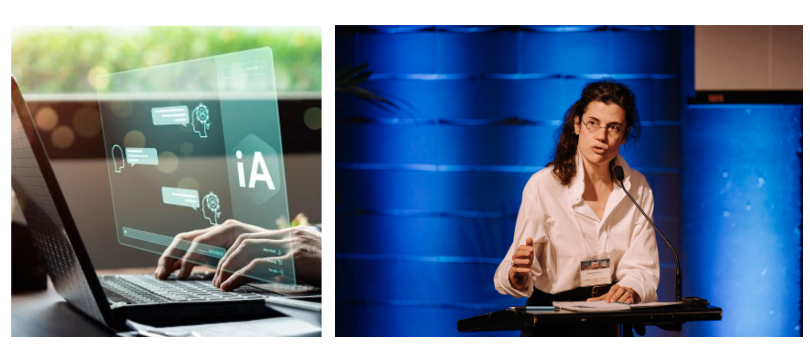
La inteligencia artificial está cada vez más presente en todos los ámbitos de nuestra vida, incluido el laboral. Promete revolucionar el empleo y por eso se debe regular reconociendo el derecho de los trabajadores a participar de ese cambio y haciendo la IA más transparente y más democrática. Es la tesis que defiende Isabelle Ferreras, presidenta del Comité Internacional de Expertos sobre Democracia en el Trabajo y autora principal de un informe sobre este tema, elaborado por encargo del Ministerio de Trabajo de Yolanda Díaz. Con ella hablamos de los retos que plantea la inteligencia artificial en las empresas. Escucha la entrevista aquí.
July 14. NET21. Francisca María Ferrando García. Hoja de ruta para el cumplimiento efectivo del artículo 129.2 de la Constitución Española
Francisca María Ferrando García (miembro de la Comisión internacional de expertos y expertas de alto nivel sobre la democracia en el trabajo) examina el mandato constitucional del artículo 129.2, que obliga a los poderes públicos a promover la participación en la empresa, fomentar las cooperativas y facilitar el acceso de los trabajadores a la propiedad de los medios de producción. El análisis sitúa el Informe Democracia en el Trabajo. Dos promesas a quienes trabajan: voz y propiedad como la hoja de ruta más completa disponible para hacer efectivo este mandato pendiente desde 1978. Leer el análisis completo aquí.
July 27. Repères. Dominique Méda. Comment travaillerons-nous demain ?
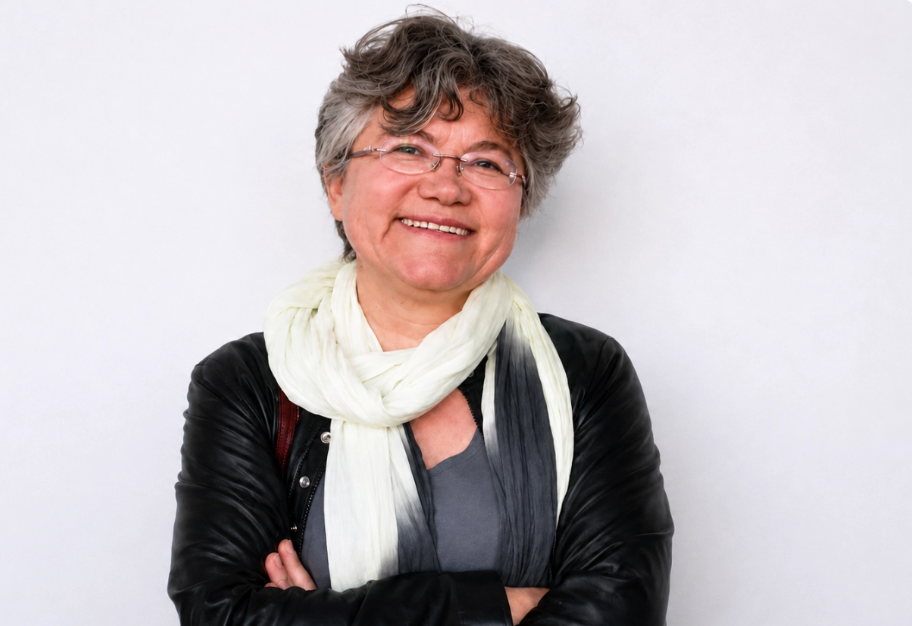
Dans cette tribune, Dominique Méda, membre du Core Group #DW rappelle que les Français restent très attachés au travail : plus de 60% le jugent très important, et plus de 80% des jeunes disent vouloir réussir quelque chose dans leur emploi. Mais ces attentes se heurtent à la réalité des conditions de travail, puisque 37% des salariés ne se sentaient pas capables en 2019 de tenir jusqu'à la retraite. Face à ce décalage, aggravé par les menaces que font peser l'IA sur l'emploi et le dérèglement climatique sur les conditions de travail, elle propose la reconversion écologique comme levier pour créer des emplois et transformer le travail lui-même. Alors que la France reste un pays aux organisations du travail très hiérarchiques, elle plaide pour que celles et ceux qui travaillent puissent non seulement être davantage consultés mais aussi participer aux décisions essentielles, comme le propose le Rapport remis par Isabelle Ferreras au gouvernement espagnol, qui ouvre la voie à une véritable révolution. Lire la tribune complète ici.
August 18. El Español. La otra revolución pendiente en las empresas españolas: “Puedes invertir millones, pero sin gente motivada no va a cambiar nada”
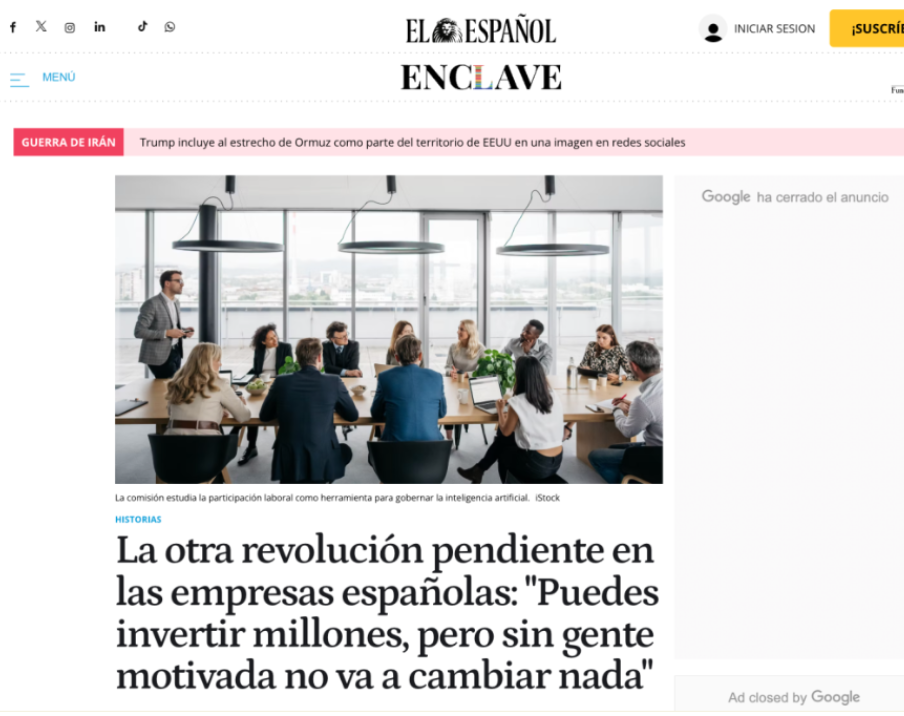
España tiene una promesa constitucional pendiente desde 1978, y el informe Dos promesas a quienes trabajan: voz y propiedad sostiene que ha llegado el momento de desarrollarla. La comisión internacional de expertos y expertas sobre democracia en el trabajo, encargada por la Vicepresidencia Segunda y el Ministerio de Trabajo y Economía Social, concluye que el artículo 129.2 no se está aplicando mediante una legislación eficaz. Leer la entrevista completa con Isabelle Ferreras aquí.
NATIONAL CHAPTER - ITALY
September 24-25. Hybrid. Naples. University of Naples. Work In Contact Network Annual Conference
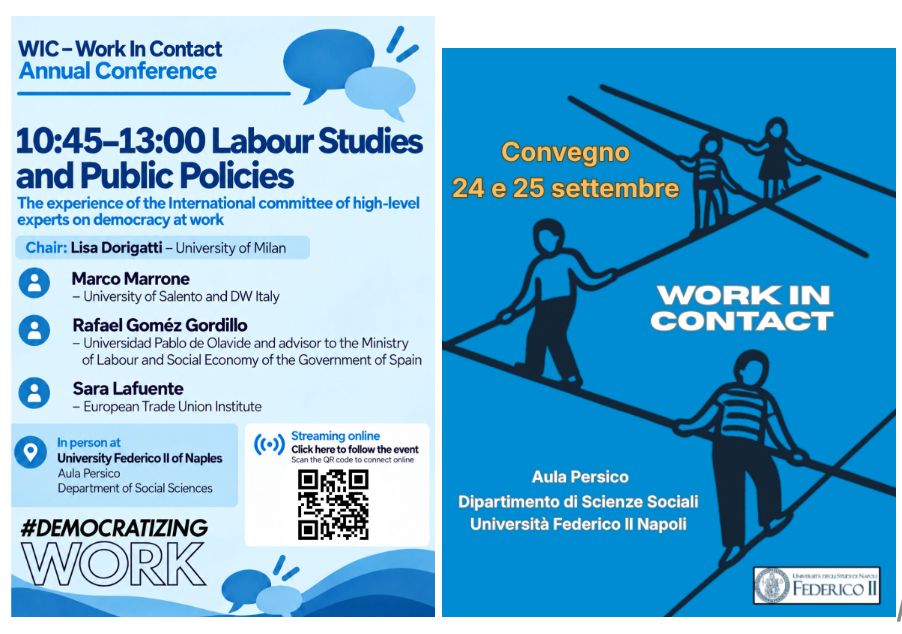
On 24 and 25 September, as part of the Work In Contact network annual conference at the University of Naples, a panel session, with #DW Core Group member Sara Lafuente Hernandez, will be dedicated to the analysis and proposals contained in the Report on Democracy at Work. Online streaming will be provided. The panel is organised by members of the #DW Italian National Chapter and will be held in English. Colleagues who cannot attend in person are warmly invited to join online (the flyer contains the QR Code for the online connection to the panel. The link to join the online meeting is also here). Full information about the conference is available on the University of Naples website.
UPCOMING EVENTS
October 22-23. Groningen, Netherlands. University of Groningen. Utopias of Work: Historical Perspectives
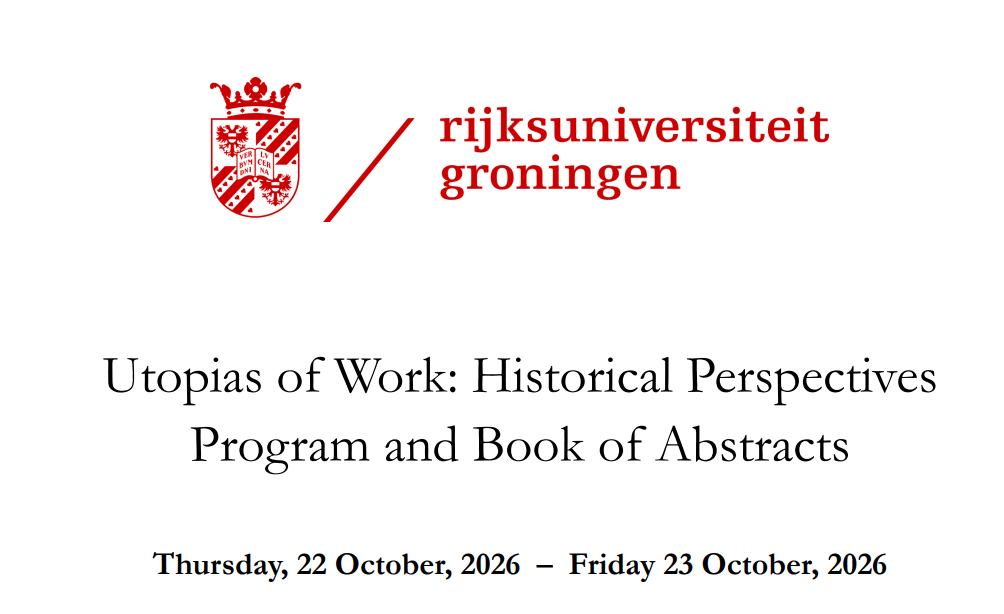
#DW Core Group member Lisa Herzog (University of Groningen) and Tyler C. Re convene a two-day conference turning to the history of philosophy and political economy for utopian and radical perspectives on work. Recent changes in the world of work, from growing precarity and platform work to the unequal impact of automation and AI, have renewed interest in how work might be valued, compensated, and organised differently. The conference explores how thinkers from Plato to Gandhi saw the rational or democratic organization of firms, unions, and labor markets as means of advancing justice, freedom, and virtue at work, and closes with a panel on what these traditions offer the 21st century. Keynotes by David Leopold (University of Oxford), Laurence Davis (University College Cork), and Michelle C. Smith (Clemson University). The event is part of the Ammodo project The political philosophy of work: expanding our vision. You can register here. The full programme and book of abstracts is available here.
November 20. London, Westminster. Making AI Accountable by Design. The Internal Condition for Ethical AI/Alignment: Worker Voice from Code to Boardroom
Organised by the Institute for Ethics in AI (Oxford) and the Center for Labor and a Just Economy (Harvard), this conference brings the case for worker voice in AI governance to Westminster. Registration details will follow.
PAST EVENTS
June 4. Paris. World Inequality Lab / Paris School of Economics. Global Justice Report launch
The recording of the panel is now available. Starting at hour 2:26:00, #DW signatories Ingrid Robeyns and Jean Drèze (#DW Indian Chapter), and Isabelle Ferreras discuss democratizing work and the economy in the context of the release of the Global Justice Project, which refers to the Report to Spain on Democracy at Work as a concrete framework for the democratic transformation of the economy.
June 25. Hybrid, Oxford University. Reimagining the Future of Work: Towards a Right to Shape AI
This high-level conference explored the right to shape AI as key to the future of work in a democratic society. Hosted by Oxford’s Institute for Ethics in AI and the Bonavero Institute for Human Rights, the conference brought together policy makers, academics, business leaders and employee representatives to explore concrete proposals to embed and renew human agency at work. Discussion focused on the results of the report on Democracy at Work commissioned by the Government of Spain and on the ERC-funded iManage project led by Professor Jeremias Adams-Prassl. Keynote speakers will include Yolanda Diaz, Vice-Prime Minister of Spain and Minister of Labour, who set out her government’s agenda in support of worker voice and ownership, and economics Nobel laureate Professor Daron Acemoglu, who is championing pro-worker AI. The key proposals stemming from the Report to Spain as they speak to AI are available here.
You can watch the recording here:
September 8. European Parliament, Brussels. Countering the Campaign Against Social Europe
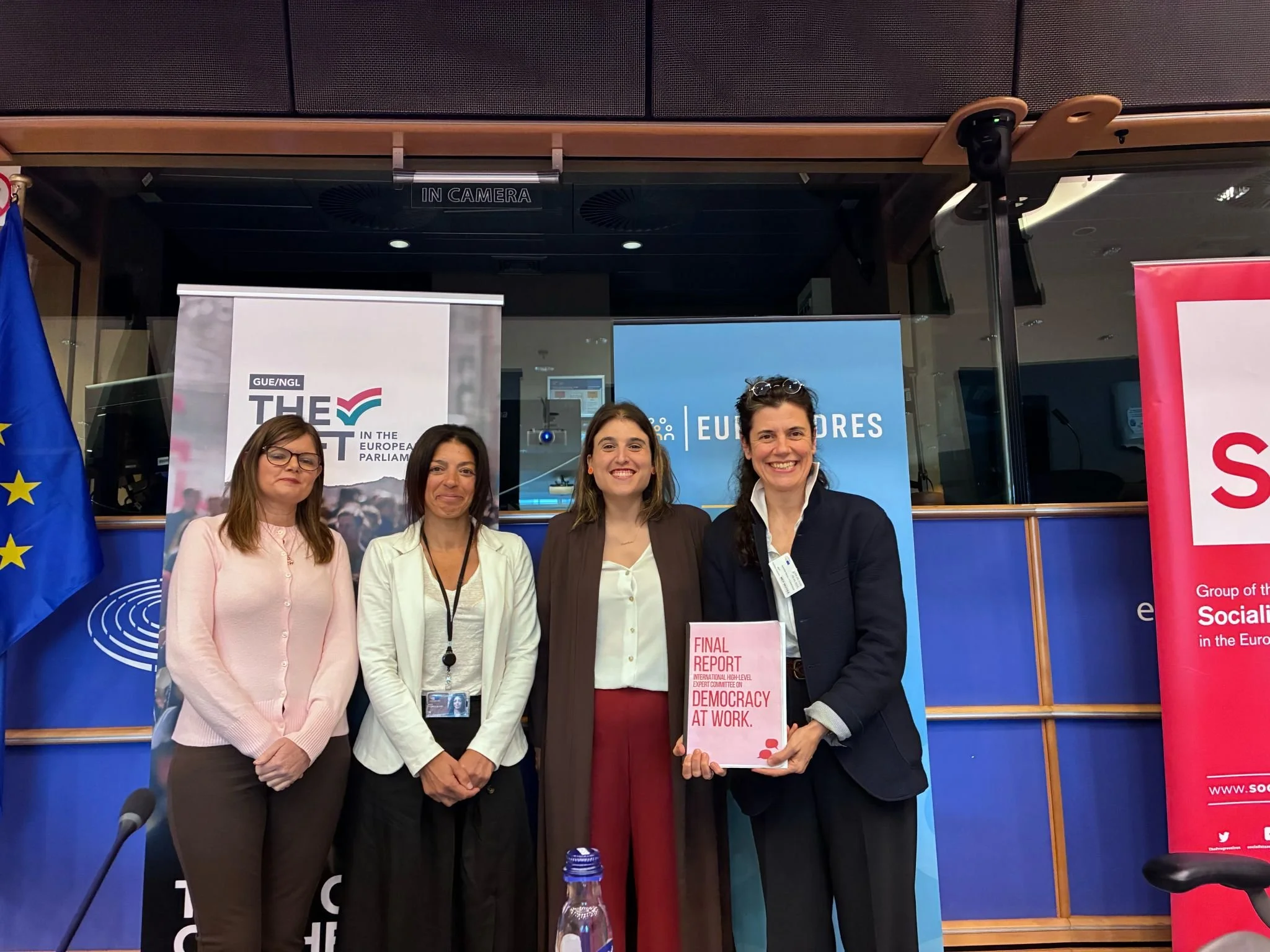
Isabelle Ferreras delivered a keynote at the European Parliament on the Report on Democracy at Work, prepared for the Spanish Government. The event, “Countering the Campaign Against Social Europe,” was organised by the two political groups, The Left and S&D. Isabelle presented the findings and next steps of the Report on Democracy at Work, detailing how the European level can also support greater democracy at work at a moment when European societies need a just transition toward a democratic and sustainable future. In the context of ongoing discussions on the Quality Jobs Act, Ferreras emphasised the accelerating role that the deployment of AI at work is playing in the current crisis. She described AI as a technology of government that therefore requires a proper political and democratic response, one that places the consent of the governed, the foundation of the democratic project, at the centre of the workplace as well. You can read more about it here.
On the Report on Democracy at Work to the Spanish Government
There is too much happening to be included here. For a full overview of related events and press coverage, check the Expert Committee website, which is constantly being updated. Let us know if you would like to organise a discussion around the Report on Democracy at Work in your country! Again, you can access the full Report in Spanish (500 pages) and in English (400 pages), with a 5-page executive summary and a 26-page comprehensive summary, and the Introduction in Spanish, English, and French.
This information-sharing tool is meant to disseminate recent research results, debates, and actual progress with Democratizing, Decommodifying, and Decarbonizing Work within and around our global network. Please share updates from your end. You can share your news about #DemocratizingWork by sending us an email to info@democratizingwork.org.
Onward and upward,
The #DemocratizingWork Core Group,
Julie Battilana, Harvard University, Isabelle Ferreras, FNRS/University of Louvain-Harvard CLJE, Dominique Méda, University of Paris Dauphine PLS, with Alyssa Battistoni, Barnard College, Julia Cagé, Sciences Po-Paris, Neera Chandhoke, University of Delhi, Lisa Herzog, University of Groningen, Imge Kaya-Sabanci, IE Business School, Madrid, Sara Lafuente Hernandez, University of Brussels-ETUI, Hélène Landemore, Yale University, Flavia Maximo, Universidade Federal de Ouro Preto, Brazil, Pavlina R. Tcherneva, Bard College-Levy Economics Institute