
#DW #14 Newsletter
JANUARY - FEBRUARY 2026
From Op-Ed to Policy:
Report for Spain out on Monday!
Dear signatories of the #DemocratizingWork Manifesto,
Our ideas are no longer confined to scholarly debate. They are entering the realm of concrete public policy. The International High-Level Expert Committee on Democracy at Work, chaired by #DW core group and co-founder Isabelle Ferreras, including #DW core group member Julie Battilana and Sara Lafuente, is releasing a landmark report in Spanish and English of more than 400 pages, putting forward concrete policy proposals to translate the ideals of democratizing work into real-life institutional change, that can materially improve the lives of workers every day.
The report will be officially released on February 2. Please join us in attending the ceremony live from Madrid on Monday 2 at 11am CET. You can follow it here.
Then, Yolanda Diaz will move directly to the United States in an effort to bring the discussion up to the international level. She will join Julie Battilana and Isabelle Ferreras at Harvard on February 4. To discuss the Report, we will host with ASETT a webinar on February 12 introducing the report, its ambitions, and its relevance well beyond Spain.
Two Promises to Those Who Work: Voice and Ownership to be released on February 2
with new documentary
After months of intensive collective work, the International High-Level Expert Committee on Democracy at Work has completed its report on the implementation of Article 129.2 of the Spanish Constitution. Mandated by Vice-President of the Spanish Government and Minister of Labour and Social Economy, Yolanda Díaz, this long-awaited report will be released on February 2.
Entitled Two Promises to Those Who Work: Voice and Ownership, the report will be available as of February 2 on this website in English and Spanish.
A documentary accompanying the report captures the stakes, the process, and the collective ambition behind this work. You can watch it here.
The report lays out a bold and operational roadmap to make workers’ voice and ownership rights effective at the firm level. It reflects a demanding process of deliberation and drafting, driven by the Committee and strongly shaped by members of the #DemocratizingWork core group, including Isabelle Ferreras (Chair), Sara Lafuente Hernández (University of Brussels-ETUI), and Julie Battilana (Harvard University). The Committee heard from world-leading experts, such as Nobel Memorial Prize in Economic Sciences laureate Daron Acemoglu (MIT) as well as from Spanish civil society.
This publication marks a turning point. It moves economic democracy from constitutional aspiration to concrete public policy, firmly placing the democratization of work at the center of the Spanish political agenda. Beyond Spain, it offers a major point of reference for all those, across Europe and beyond, working to transform how firms are governed.
Now the report is out, we count on you. Please share it widely across your networks, institutions, and public arenas, so that these two promises, access to voice and access to ownership, can fully contribute to advancing democracy at work.
12 February 2026: Two Promises to Those Who Work. Introducing the Report of the Spanish Government to our Global Community
We’re thrilled to announce the launch of the next edition of the #DemocratizingWork Global Workshop Series, co-organized with ASETT. The first seminar of the series will host stellar speakers to discuss the Spanish Report. To register, fill this form.
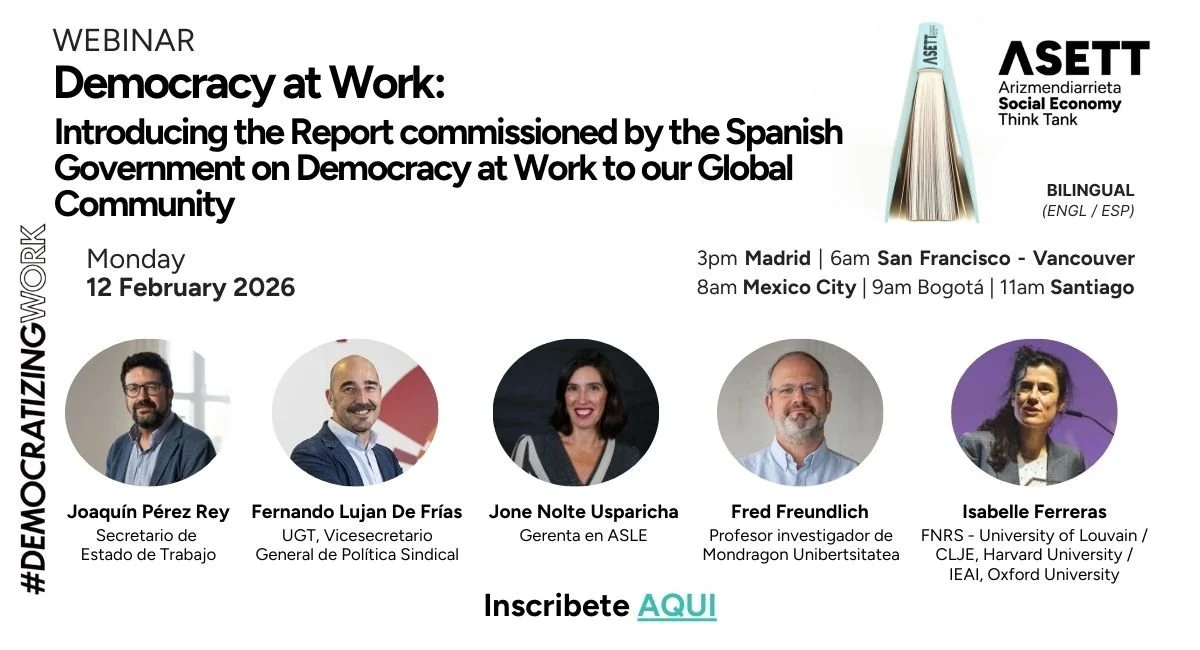
Mark the next sessions in your calendar
Time: 6am San Francisco-Vancouver | 8am Mexico City | 9am Bogotá-NYC-Montréal | 11am Santiago | 3pm Paris | 4pm Johannesburg | 7:30pm New Delhi | 9pm Jakarta | 1am Sydney
26 March 2026: AI and Democracy at Work
23 April 2026: Democratizar el trabajo: Perspectivas iberoamericanas
More details, speakers, and registration information will follow soon.
EVENTS
4 February 2026, Cambridge MA - Annual John T. Dunlop Memorial Forum, Two Promises to Those Who Work: Voice and Ownership with Yolanda Díaz Pérez, Second Deputy Prime Minister and Minister of Labor and Social Economy of the Government of Spain
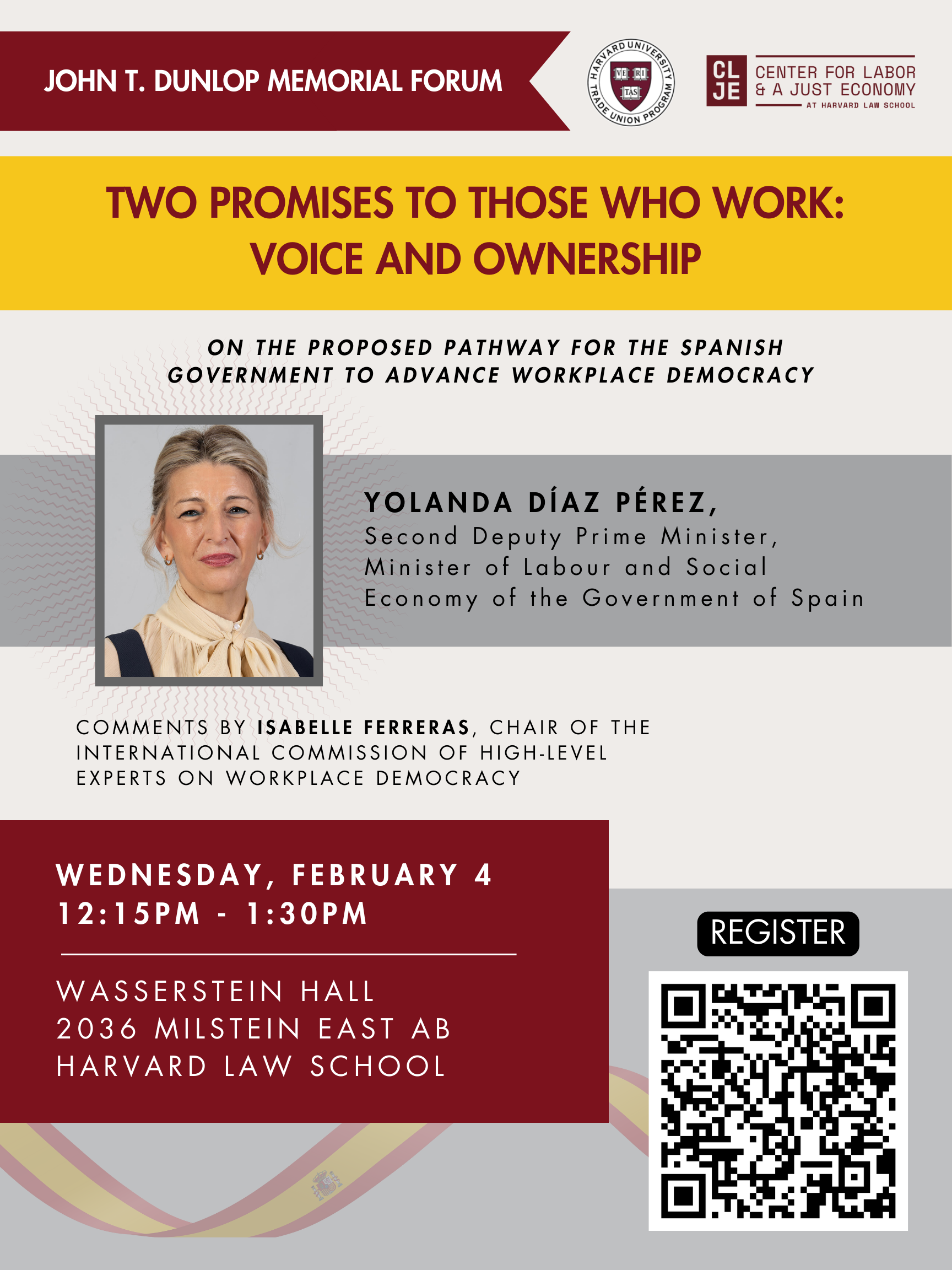
Immediately after releasing the Report in Madrid, Yolanda Diaz and Isabelle Ferreras will join Julie Battilana in Harvard to present it:
Join the Harvard Trade Union Program to hear from Minister Yolanda Díaz Pérez, Second Deputy Prime Minister and Minister of Labor and Social Economy of the Government of Spain and Isabelle Ferreras, Chair of the International Commission of High-Level Experts on Workplace Democracy on the proposed pathway for the Spanish Government to advance democracy at work.
The annual John T. Dunlop Memorial Forum honors a distinguished contributor in the field of industrial relations and labor and is hosted by the Harvard Trade Union Program housed at the Center for Labor and a Just Economy. If you are not a Harvard ID holder, please come to the WCC entrance by the Coop at corner of Mass Ave and Everett Street. You can register here.
March 30, 2026, London. London School of Economics – Isabelle Ferreras will give the Ralph Miliband lecture on Economic Democracy
Is a democratic economy possible? Lessons from history, horizons for the future (In-person and online public event)
Fifty years after powerful labour movements launched radical plans to democratise the economy and gain control of large businesses, what is the legacy of these efforts and what are the prospects for economic democracy today?
Join us to discuss the anniversary of the « Meidner plan », a famous moment in the history of socialism when Swedish unions tried to take ownership of all large companies there. What can we learn from the ambitions and failures of projects like this? What should plans for economic democracy look like today? And what is the best way to pursue projects for economic democracy in practice? Isabelle Ferreras will discuss the Report commissioned by the Spanish Government: Two promises to Those Who Work: Voice and Ownership. You can register here.
NATIONAL CHAPTER
France
Paris, 5 février 2026 - Assises de la Démocratie en Organisations
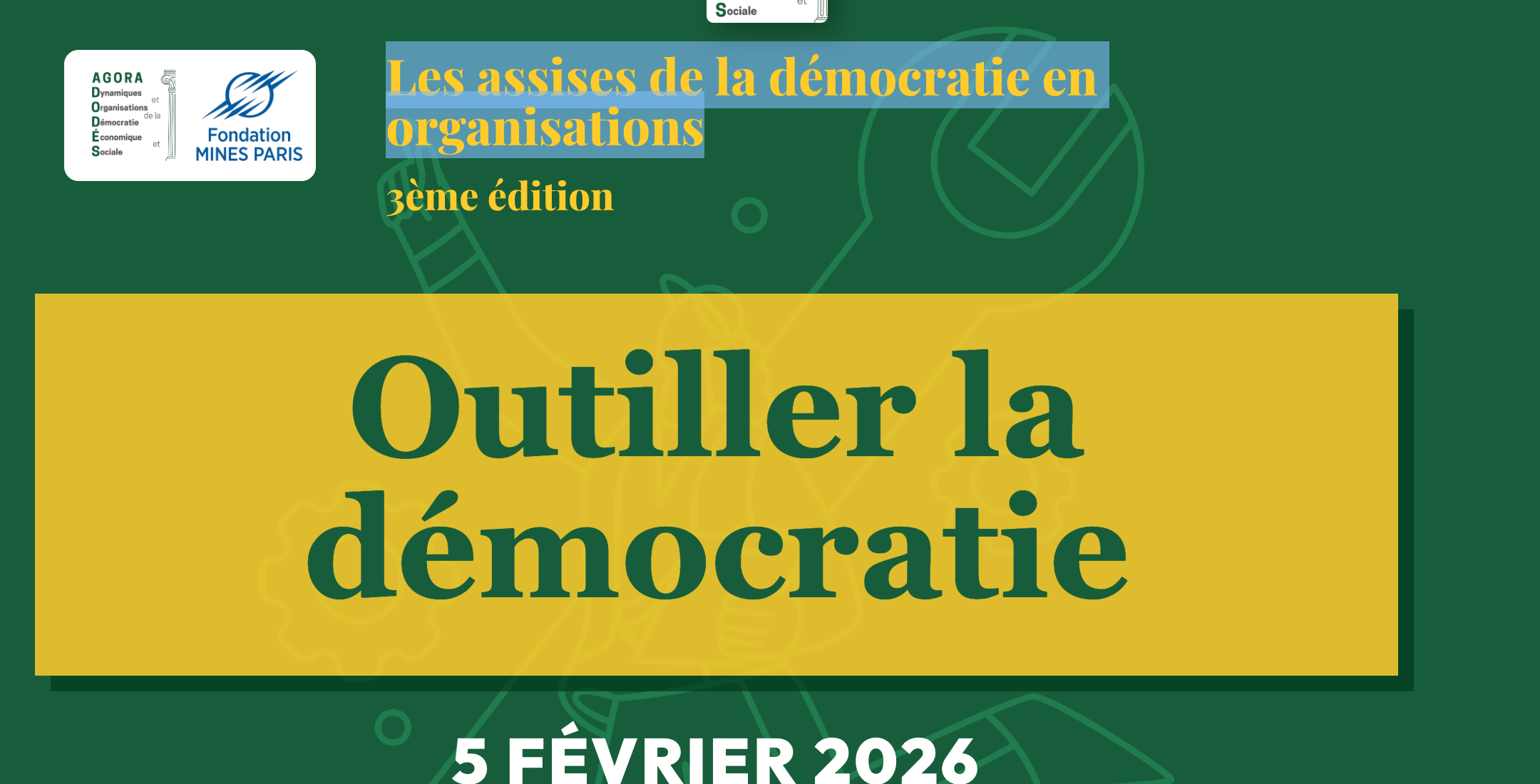
La 3ᵉ édition des Assises de la Démocratie en Organisations se tiendra le 5 février 2026 à Paris. C’est une journée de réflexion, d’échanges et de co-production collective dédiée à l’ambition d’« outiller la démocratie » au sein des organisations et des lieux de travail. Porté par un laboratoire d’idées réunissant praticien·ne·s et chercheur·se·s engagé·e·s dans la transformation démocratique des organisations, l’événement fédère communautés académiques, mouvements syndicaux, acteurs politiques et professionnel·le·s souhaitant approfondir et concrétiser des pratiques de démocratie économique et sociale. Parmi les intervenant·e·s attendu·e·s figurent Barbara Stiegler (philosophe), Isabelle Ferreras (membre du core group #DW), Christophe Pébarthe (historien), Charles Fournier (député) et Chloé Latour (avocate et metteuse en scène), renforçant les liens entre réflexions politiques, sociologiques et culturelles sur la démocratie au travail. Retrouvez toutes les informations ici.
BOOKS
Commoning Labour and Democracy at Work: When Workers Take Over (Routledge, 2025) Dario Azzellini and Marcelo Vieta
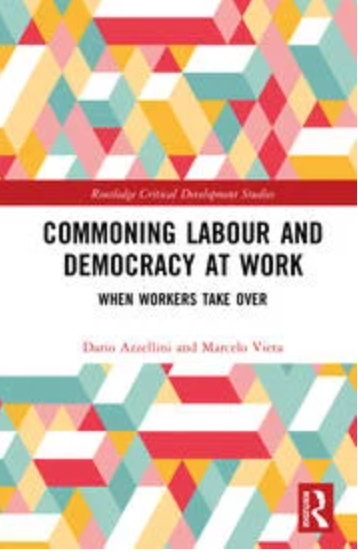
This book investigates the return of workers’ self-management in recent decades as responses to recurring neoliberal crises. In particular, the book homes in on worker-recuperated enterprises (WREs), a promising form of workers’ self-organization whereby workers restart troubled, bankrupt, or shuttered companies as cooperatives or other forms of democratic workplace. The book argues that WREs are prefigurative of new forms of work based on equality and sustainability. Framed by the concepts of autogestión, the labour commons, and prefigurative ethico-political practices, the book argues that WREs contribute to the construction of more directly democratic community economies. Drawing on a range of contemporary case studies from numerous countries in the Global South and North, as well as new theories of workers’ self-management, the book contributes a critical development, political economic, and class-struggle Marxist perspective to the re-emergent labour question within anti-systemic social movements, while theorizing the transformative nature of WREs for workers, work organizations, and communities. Bringing a class-analysis back into current discourses and debates concerning democracy at work and alternatives to global capital, this book will be of interest to researchers across the fields of development studies, labour studies, political economy, sociology of development, sociology of work, and political science. The book is available here.
The Work We Need (Virago, 2025) Hilary Cottam
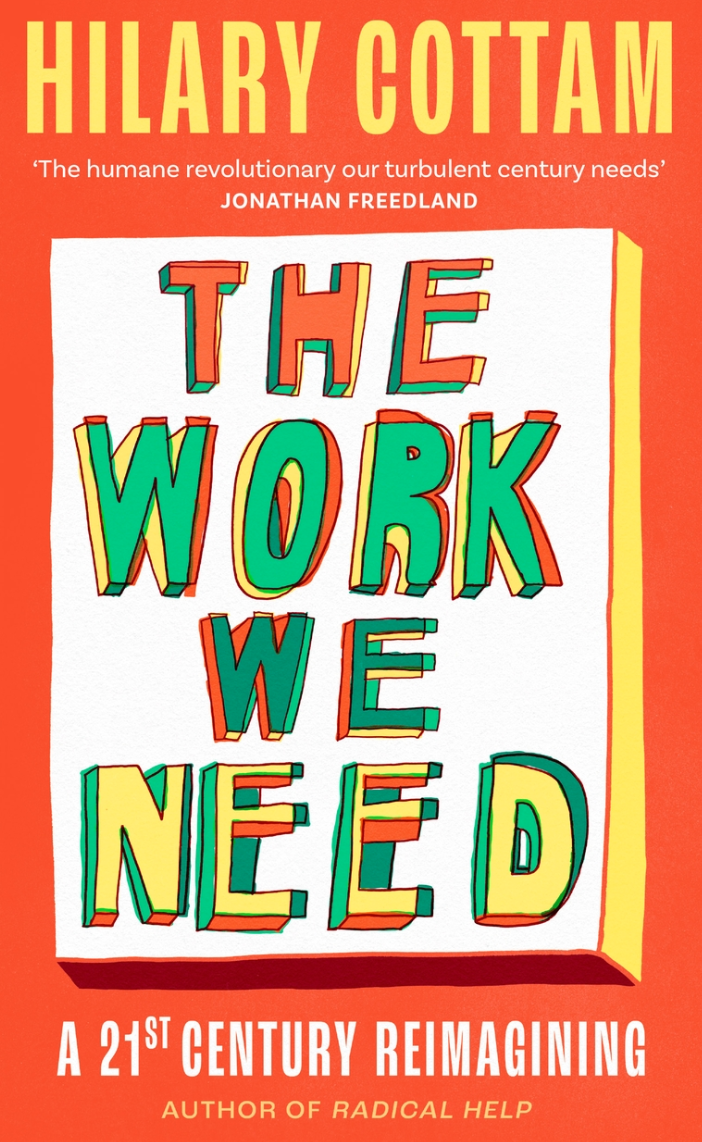
Work, for decades, has been debated and discussed as a narrow economic category. Instead, Hilary Cottam identifies work as a cultural force at the heart of good lives, strong communities and a sense of a shared national destiny. Crucially, in these dramatic times, she shows how we can shape this force to meet technological change, our ecological crisis and the challenges of the world’s deep injustices. We can create a work revolution. Ambitious but rooted in the ideas of everyday experts – real workers from all walks of life – this is a realistic and hopeful book. Hilary Cottam has crossed the UK and the USA; she’s spent time in communities considered by outsiders as ‘left behind’ and in places at the centre of financial and technological power. Drawing on a fascinating range of sources – historians, trade unionists, business leaders, philosophers and most originally, hours of her imaginative workshops with workers – Hilary Cottam boldly asks: how can we redesign work? Our challenges – political, social, economic and environmental – are tangled and growing. But so are the imaginative solutions. In this exciting, inspiring and optimistic book, Hilary shows us how we could work differently and live better. The book is available here.
SCIENTIFIC PAPERS
DIGILARE: defending collective rights in the digital transformation of work

A new policy paper from the European DIGILARE project marks an important step in advancing workers’ collective rights in the context of digital transformation.
Conducted over 24 months (2023–2025), DIGILARE brought together 23 social law researchers from 18 universities and institutions in 15 countries (European Union and Turkey). The project tackles a central challenge of our time: how to protect and renew workers’ collective rights in an increasingly digitalised world of work. At a moment when digitalisation risks hollowing out collective protections, DIGILARE offers a rigorous and policy-oriented contribution to ensuring that democracy at work remains a cornerstone of Europe’s social model.
DIGILARE has produced a set of freely accessible deliverables: two synthesis reports covering the four areas of the project, an in-depth analysis of the acquis communautaire on collective rights, and a multilingual policy paper advancing concrete proposals for regulatory change at the European level. They are available here.
August 2025, MEDIAÇÕES - Karen Artur, Ligia Barros de Freitas, Jean Filipe Domingos Ramos, Algorithms, labour and normative spaces: rebalancing power to ensure democracy at work
Drawing on literature from the European Trade Union Institute and evidence from public hearings before Brazil’s Supreme Federal Court and Federal Senate of Brazil, this article maps how key actors in the world of work are attempting to counter the anti-democratic uses of algorithmic management in labour relations. Authored by Karen Artur (Universidade Federal de Juiz de Fora), Ligia Barros de Freitas (Universidade do Estado de Minas Gerais), and Jean Filipe Domingos Ramos (Universidade Federal de Juiz de Fora), the analysis shows that collective labour concerns have gained stronger institutional traction within European regulatory guidelines than in Brazil. It observes that the efforts to put collective labour regulatory concerns on the agenda have been more successful in the European guidelines. This action is under strain in the Brazilian regulatory sphere of digital platforms and artificial intelligence (AI). At the same time, debates in the Supreme Court on the recognition of employment relationships and in the Federal Senate on AI indicate a process of diluting labour protections. The article is available here.
Noviembre 2025, Revista de Economía Pública, Social y Cooperativa - Número especial, La participación de las personas trabajadoras en la empresa
La revista de referencia en economía social, Revista de Economía Pública, Social y Cooperativa CIRIEC España acaba de publicar un número especial íntegramente dedicado a la participación de las personas trabajadoras en la empresa, en el marco de una iniciativa gubernamental orientada a explorar nuevas vías para reforzar la democracia en las organizaciones. El volumen reúne aportaciones de alto nivel académico y relevancia para la política pública sobre cómo profundizar la participación en distintas formas empresariales. Entre ellas, algunos autores son miembros de la Comisión Internacional de Expertos y Expertas de Alto Nivel sobre la Democracia en el Trabajo, y miembro del #DW core group, Sara Lafuente Hernandéz (University of Brussels-ETUI), aporta un análisis comparado e institucional de la participación laboral, o tambien la coordinadora Isabel-Gemma Fajardo García (Universitad de València). El número reúne aportaciones jurídicas, económicas, organizativas y comparadas que analizan cómo la participación de las personas trabajadoras puede impulsar la democratización, la eficiencia y la sostenibilidad de las empresas en España y en el contexto europeo, desde la cogestión y la presencia en los consejos de administración hasta el cooperativismo, la economía social y los comités de empresa europeos. En su conjunto, los trabajos ponen de relieve tanto el amplio potencial aún no realizado de la democracia económica como las vías concretas para avanzar en ella, identificando bloqueos institucionales, aprendizajes comparados y el papel estratégico de los modelos de gobernanza, los sindicatos y las iniciativas multiactor. El número especial está disponible en acceso abierto aquí.
December 2025, Global Social Policy - Renata Dutra, Flavia Máximo, Disputing voices in the regulation of work on digital platforms in Brazil: A decolonial perspective
Flavia Máximo (Universidade Federal de Ouro Preto, Brazil), #DW core group member and Renata Dutra have recently published a contribution showing how Brazilian labor law reproduces colonial hierarchies by marginalizing the voices of racialized and precarious workers in the regulation of digital platform work. Labor law continues to claim universality while remaining epistemologically rooted in the Global North. They highlight that with a legal epistemology intertwined in coloniality, Brazilian labor law performs a regulation of work on digital platforms that maintains racial and social structures of the power of colonization. The article is available here.
This information-sharing tool is meant to disseminate recent research results, debates, and actual progress within and around our global network with Democratizing, Decommodifying, and Decarbonizing Work. Please share updates from your end. You can share your end of the news about #DemocratizingWork by sending us an email to info@democratizingwork.org.
Onward and upward!
The #DemocratizingWork Core Group,
Julie Battilana, Harvard University, Isabelle Ferreras, FNRS/University of Louvain-Harvard CLJE, Dominique Méda, University of Paris Dauphine PLS,
With Alyssa Battistoni, Barnard College, Julia Cagé, Sciences Po-Paris, Neera Chandhoke, University of Delhi, Lisa Herzog, University of Groningen, Imge Kaya-Sabanci, IE Business School, Madrid, Sara Lafuente Hernandez, University of Brussels-ETUI, Hélène Landemore, Yale University, Flavia Maximo, Universidade Federal de Ouro Preto, Brazil, Pavlina R. Tcherneva, Bard College-Levy Economics Institute
Rising to the challenge!
Let’s get ready for this new year!
Dear signatories of the #DemocratizingWork Manifesto,
Five years ago, more than 6000 researchers from over 750 universities and academic institutions came together with a clear and urgent message: to ensure a democratic and sustainable future for all, work must be democratized, labor decommodified, and our economies remediated. At a time marked by deep political uncertainty and democratic backsliding, we need to come together once again, to leverage new opportunities (read about the Spanish leadership below!), and to rally support for the Indian world-renowned program of Job Guarantee. Please take a minute to mark down your calendar to take part in the forthcoming #DW workshop series, and join us in signing the statement to avoid the repeal of the Job Guarantee program in India. Onward with great action and research in the support of the 3 principles! The people and the planet need it!
DEMOCRATIZE - DECOMMODIFY - DECARBONIZE
Spanish report on Democracy at Work to be released on February 2
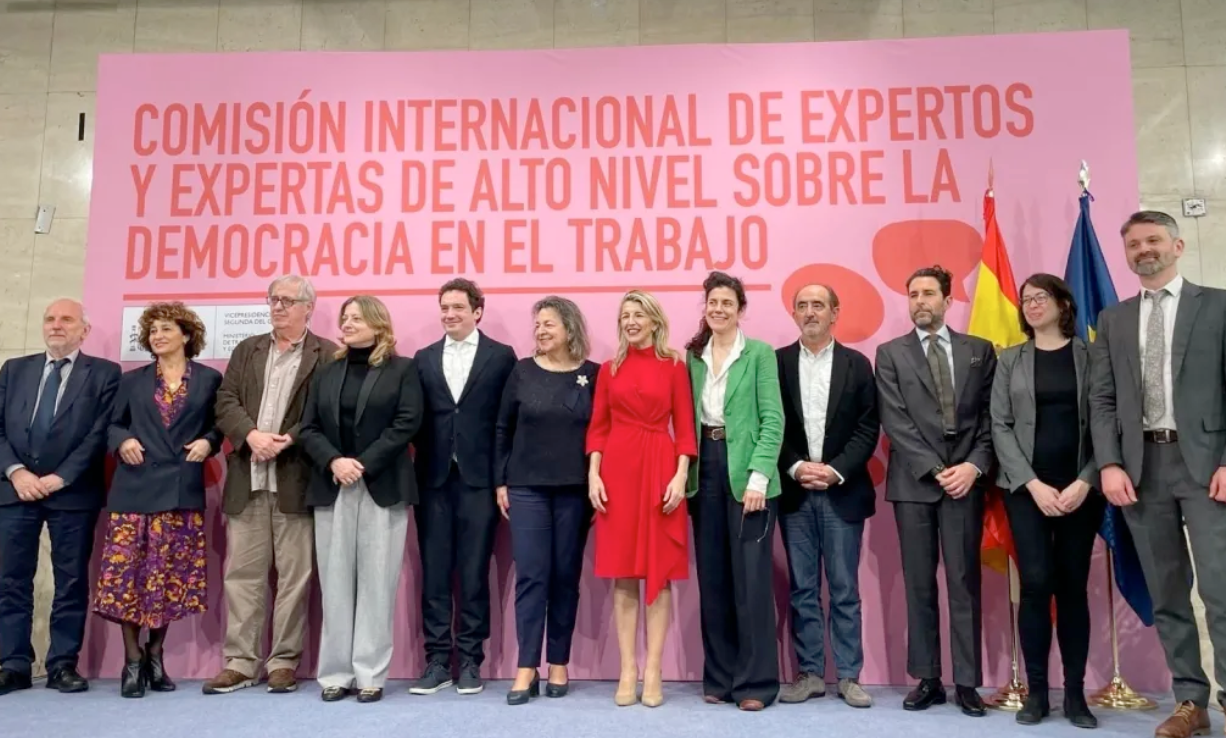
Following the mandate entrusted by Vice-President of the Spanish Government and Minister of Labor and Social Economy, Yolanda Díaz, the Expert Committee on Democracy at Work has finalised its report on the implementation of Article 129.2 of the Spanish Constitution (for more information, click here). The report will be officially published on February 2 at 11:00 a.m. in Madrid.
Over the past months, the Committee has worked tirelessly to deliver an ambitious and concrete roadmap to advance workers’ participation at the firm level and ownership rights. This collective effort has been carried forward through intense committee work, with a central contribution from members of the #DemocratizingWork core group, including Julie Battilana, Isabelle Ferreras (Chair of the committee), and Sara Lafuente Hernández.
This report represents a decisive step in translating constitutional principles into actionable public policy, and in anchoring economic democracy at the heart of the Spanish political agenda. It will be released in both Spanish and English as its implications extend far beyond Spain, offering a reference point for ongoing debates on democracy at work across Europe and in the world. We will need your help to spread the word!
Save the date! Join the #DW Global Workshop Series with ASETT to discuss the forthcoming Report
We’re thrilled to announce the launch of the next edition of the #DemocratizingWork Global Workshop Series, co-organized with ASETT. This new cycle of online workshops will bring together researchers, policymakers, trade unionists, business leaders, and civil society actors to explore how we can democratize work and the economy in a time of rapid technological and social transformation. Each workshop will foster an open, interactive space for collective learning, exchange, and strategic thinking.
Save the dates:
12 February 2026: Democracy at Work: Introducing the Report of the Spanish Government to Democracy at Work to our Global Community
26 March 2026: AI and Democracy at Work
23 April 2026: Democratizar el trabajo: Perspectivas iberoamericanas
Time: 6am San Francisco-Vancouver | 8am Mexico City | 9am Bogotá-NYC-Montréal | 11am Santiago | 3pm Paris | 4pm Johannesburg | 7:30pm New Delhi | 9pm Jakarta | 1am Sydney
DEMOCRATIZE - DECOMMODIFY - DECARBONIZE
Urgent Action
Please SIGN the Global Call to Defend the Right to Work in India
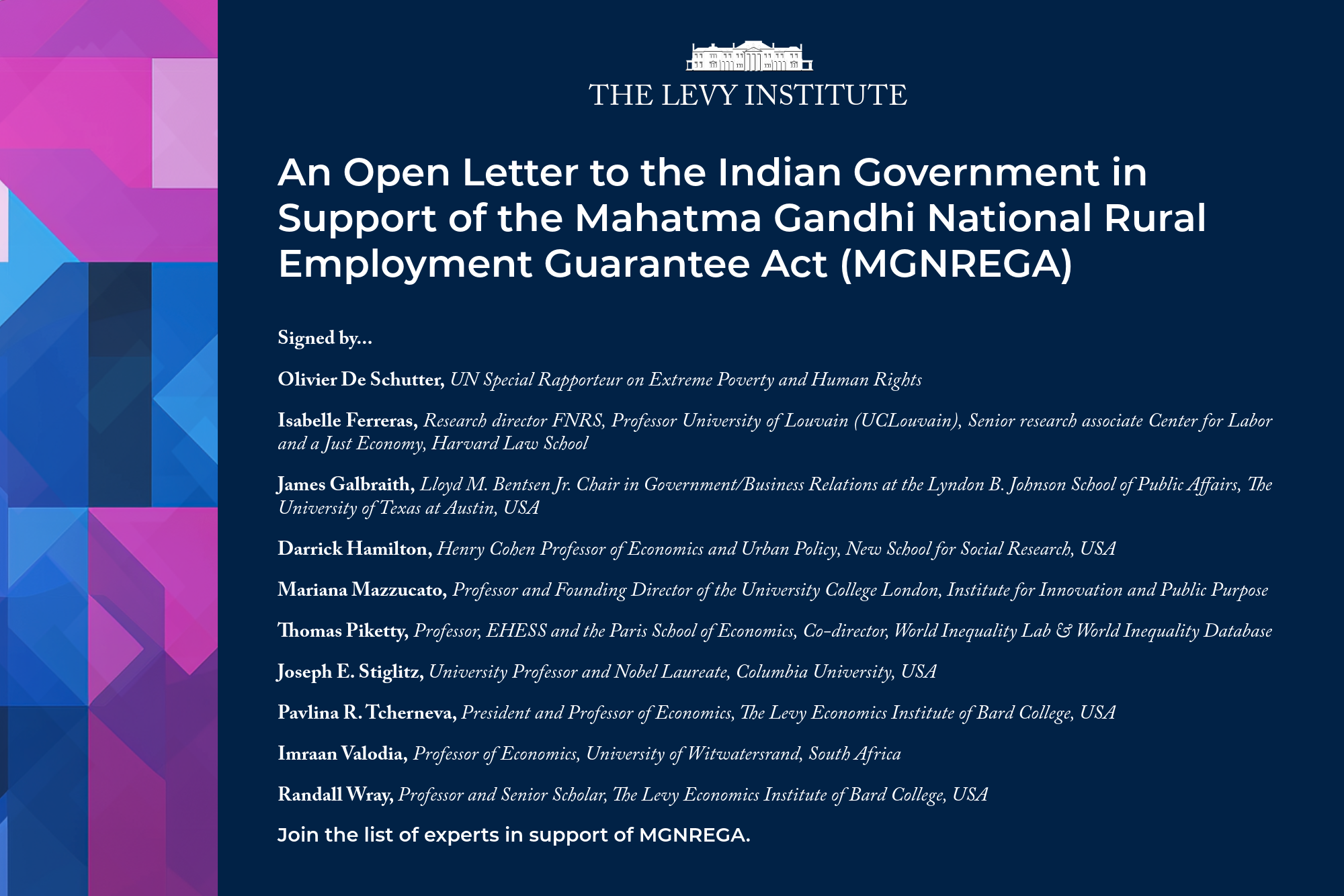
Led by Pavlina Tcherneva (#DW core group member, Levy Institute & Bard College), we invite you to join prominent economists and experts to sign the open letter in response to the proposed repeal of India’s Rural Employment Guarantee.
The Mahatma Gandhi Rural Employment Guarantee (MGNREGA or NREGA) is the largest rights-based public employment program in the world, signed into law in 2005. It faces imminent repeal by the Indian government, which intends to replace it with the Viksit Bharat – Guarantee for Rozgar and Ajeevika Mission (Gramin) VB – G RAM G Bill (2025). Through transferring greater and likely unsustainable obligations for administration and payment to the states, the changes are likely to put an end to the program.
Decommodifying work is one of Democratizing Work Manifesto’s core principles, and a federally funded Job Guarantee is a key proposal to operationalize this principle. Democratizing Work’s Indian chapter has been a vital part of our coalition. Hence, we are joining the call for NREGA’s restoration through assured central funding, timely wages, and an unequivocal return to its foundational guarantee of the right to work. Please read the open letter and consider adding your name to the list of experts calling for the preservation of the NREGA law.
DEMOCRATIZE - DECOMMODIFY - DECARBONIZE
New Book on Capitalism and the Politics of Nature

Capitalism runs on a system of relentless commodification. Yet, it persistently fails to value some of the most vital foundations of life, from ecosystems and biodiversity to reproductive labor and the biosphere itself. In Free Gifts, Alyssa Battistoni (#DW core group, Barnard College) reframes a central question of political economy: not why certain forms of nature should not be commodified, but why capitalism has so long relied on treating them as free.
Battistoni traces this logic across four key sites: natural forces in industry, pollution and environmental degradation, reproductive labor in the household, and natural capital in the biosphere. At a time of accelerating ecological breakdown, Free Gifts goes beyond diagnosing capitalism’s environmental failures to recast its core dynamics and challenge how we understand freedom, responsibility, and our capacity to live while truly valuing nature’s gifts.
Watch the Break-Down with Alyssa Battistoni:
The three principles are deeply interconnected. As we know, it’s through pursuing the three principles together that we will move toward a democratic and sustainable future for all, otherwise, we will fail. As we wrap up 2025, let’s take inspiration and hope in what we can achieve together!
This information-sharing tool is meant to disseminate recent research results, debates, and actual progress within and around our global network with Democratizing, Decommodifying, and Decarbonizing Work.
Please share updates from your end. You can share your end of the news about #DemocratizingWork by sending us an email to info@democratizingwork.org.
Onward and upward,
The #DemocratizingWork Core Group,
Julie Battilana, Harvard University, Isabelle Ferreras, FNRS/University of Louvain-Harvard CLJE, Dominique Méda, University of Paris Dauphine PLS,
With Alyssa Battistoni, Barnard College, Julia Cagé, Sciences Po-Paris, Neera Chandhoke, University of Delhi, Lisa Herzog, University of Groningen, Imge Kaya-Sabanci, IE Business School, Madrid, Sara Lafuente Hernandez, University of Brussels-ETUI, Hélène Landemore, Yale University, Flavia Maximo, Universidade Federal de Ouro Preto, Brazil, Pavlina R. Tcherneva, Bard College-Levy Economics Institute